Attila the Hun, 2026
Interactive installations and animations exploring Attila’s legacy and story at the Hungarian National Museum, blending history, myth, and contemporary digital interpretation.
This project brings together a series of interactive installations, interfaces, and animated works created for the Attila exhibition at the Hungarian National Museum. Each piece approaches the figure of Attila and the world of the Huns from a different angle, combining historical source material, archaeological references, and contemporary digital storytelling.
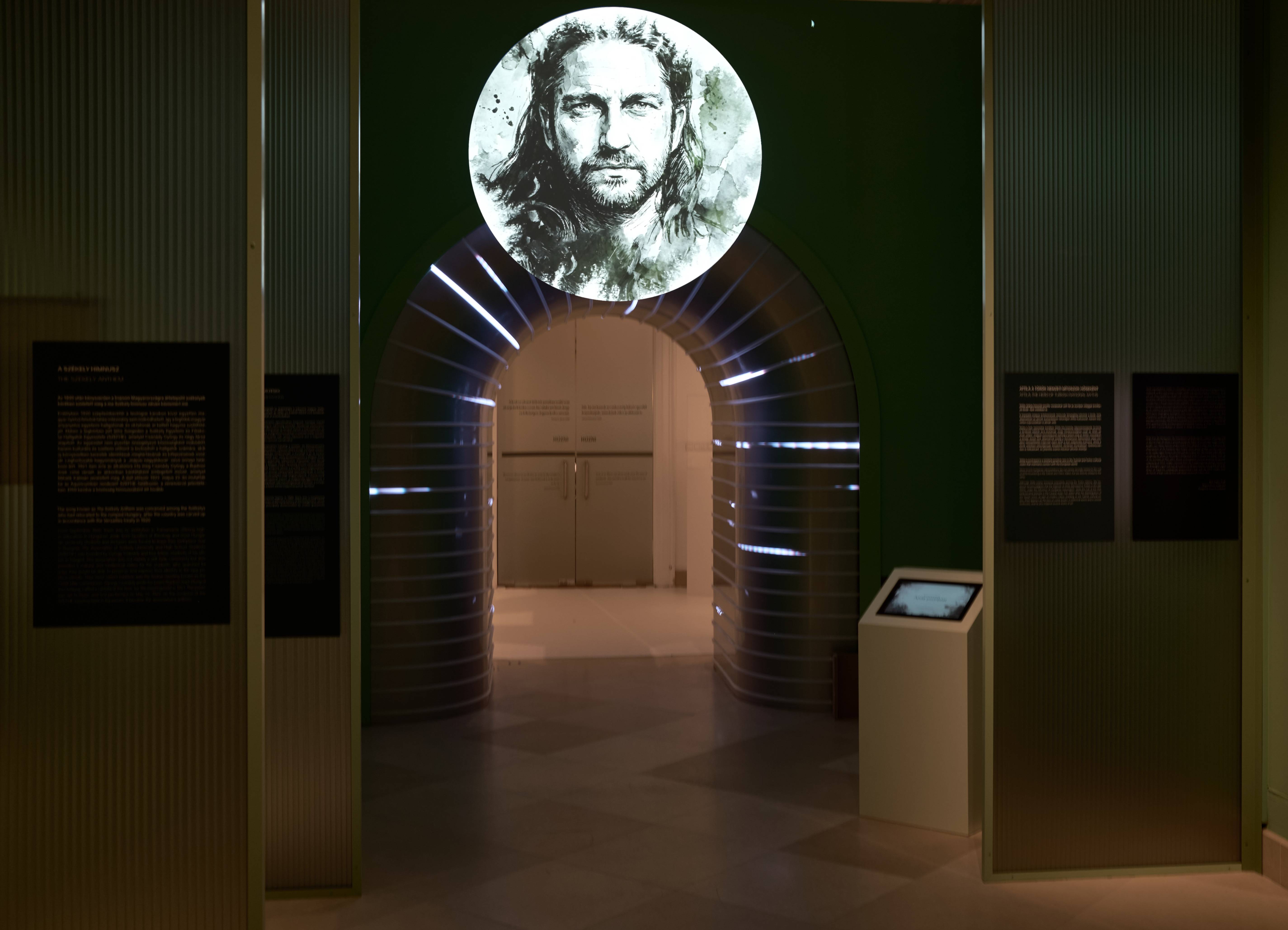
The exhibition moves between research-driven interpretation, playful visitor interaction, and atmospheric visual world-building. Rather than presenting a single narrative, the digital works open up multiple ways of engaging with Attila’s legacy: through written records, reconstructions, cartographic exploration, and symbolic imagery.
Attila Archive
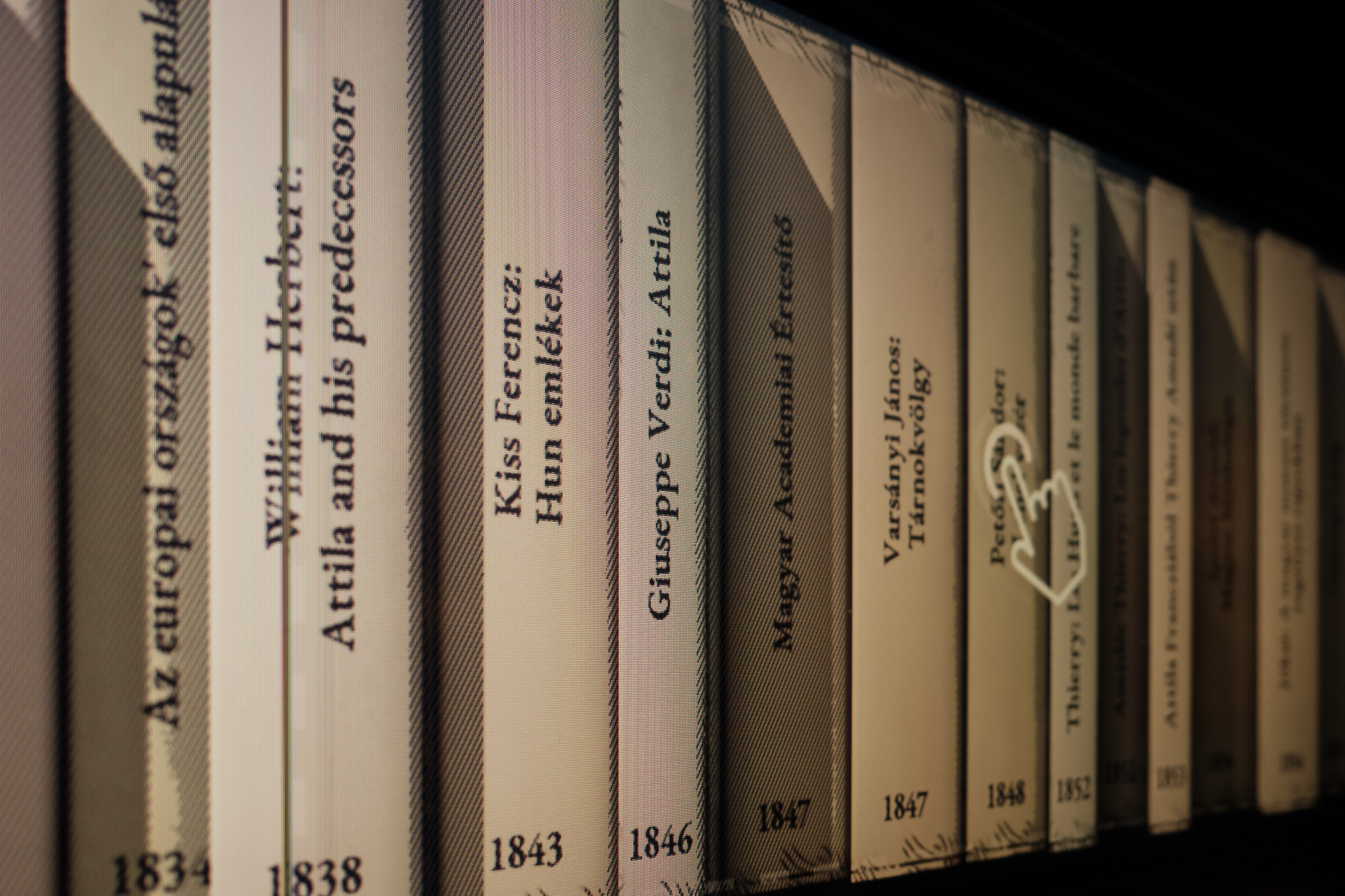
A virtual collection of written records that mention Attila, reaching back to 452 AD.
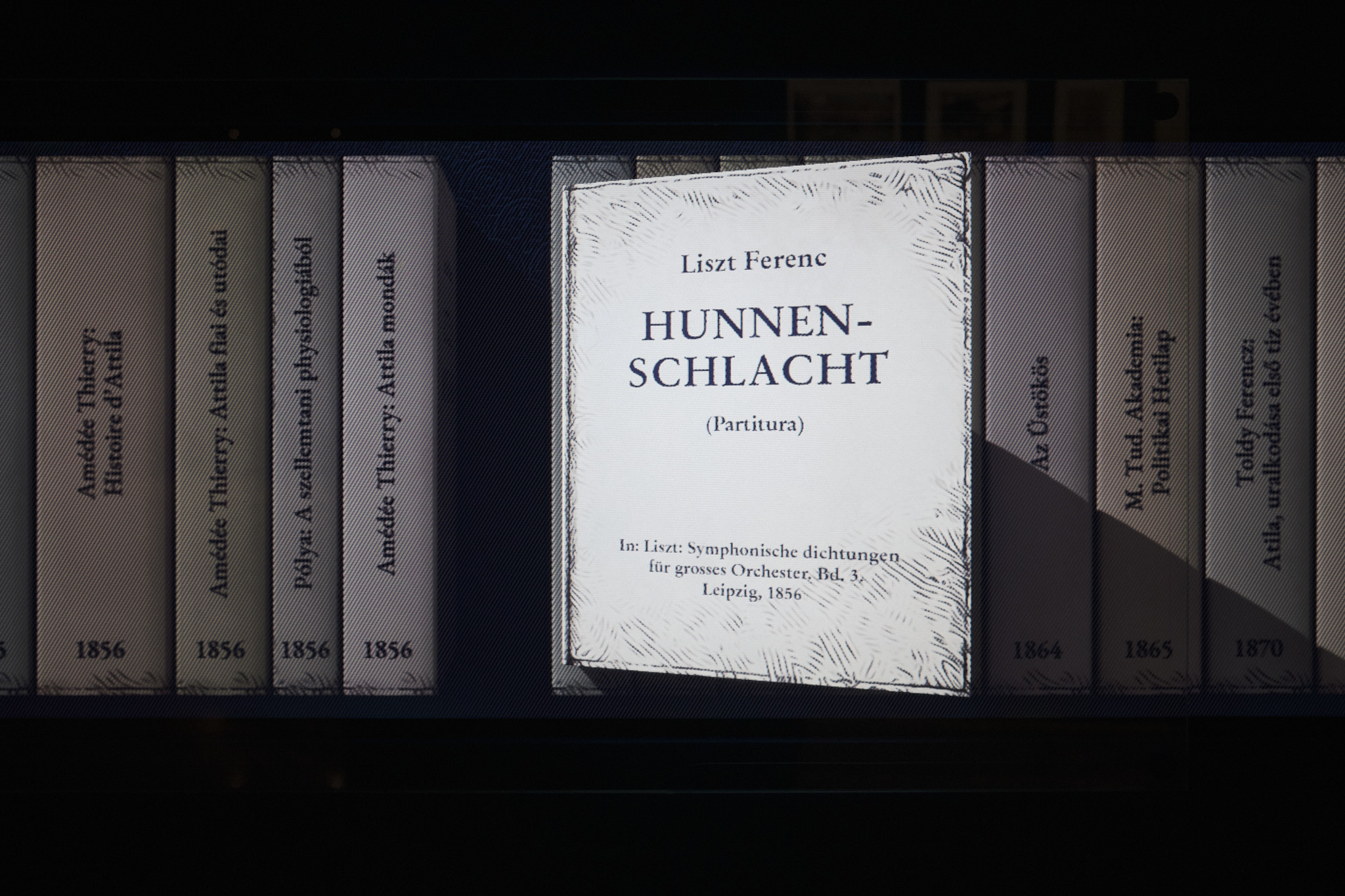
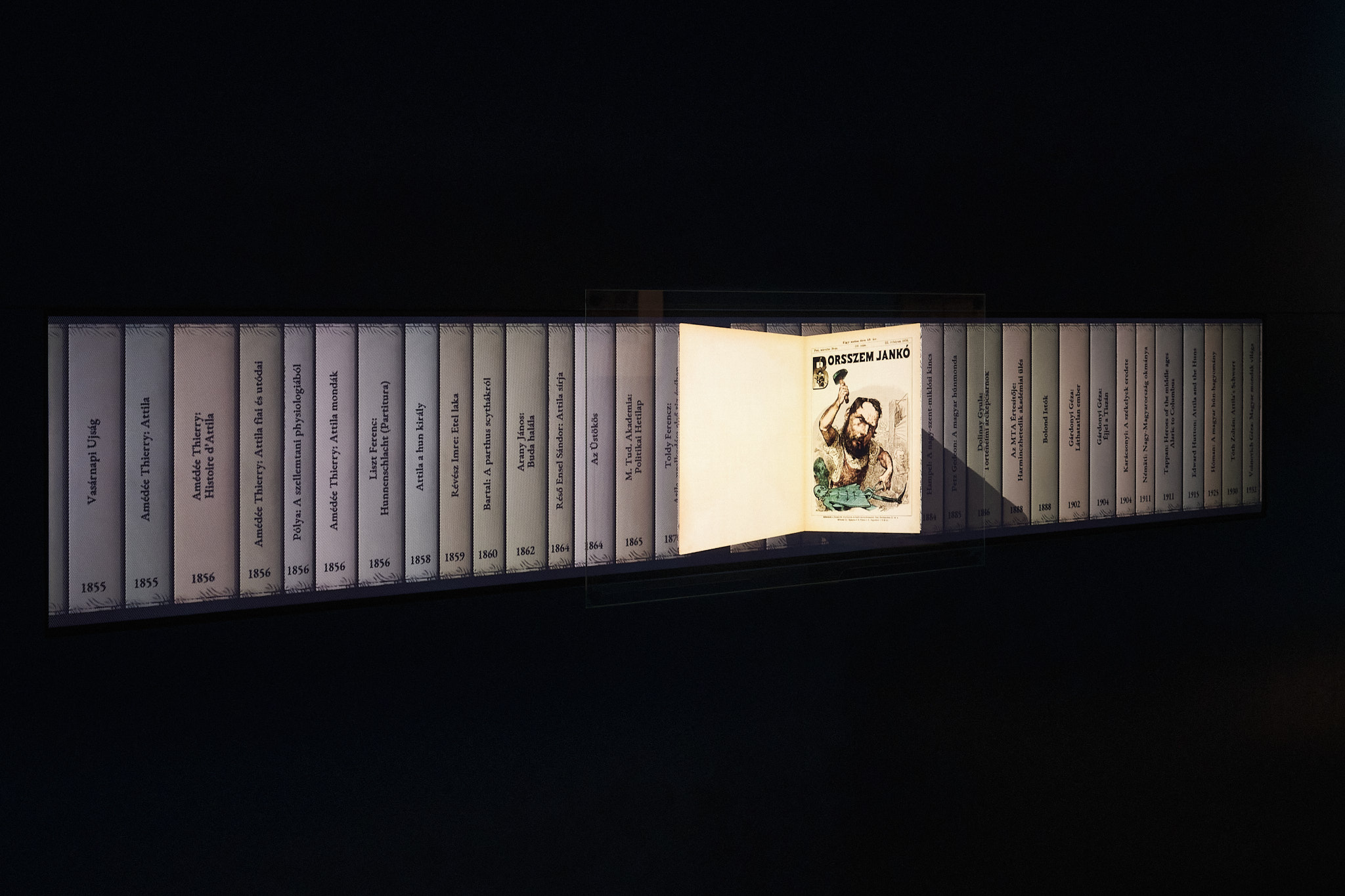
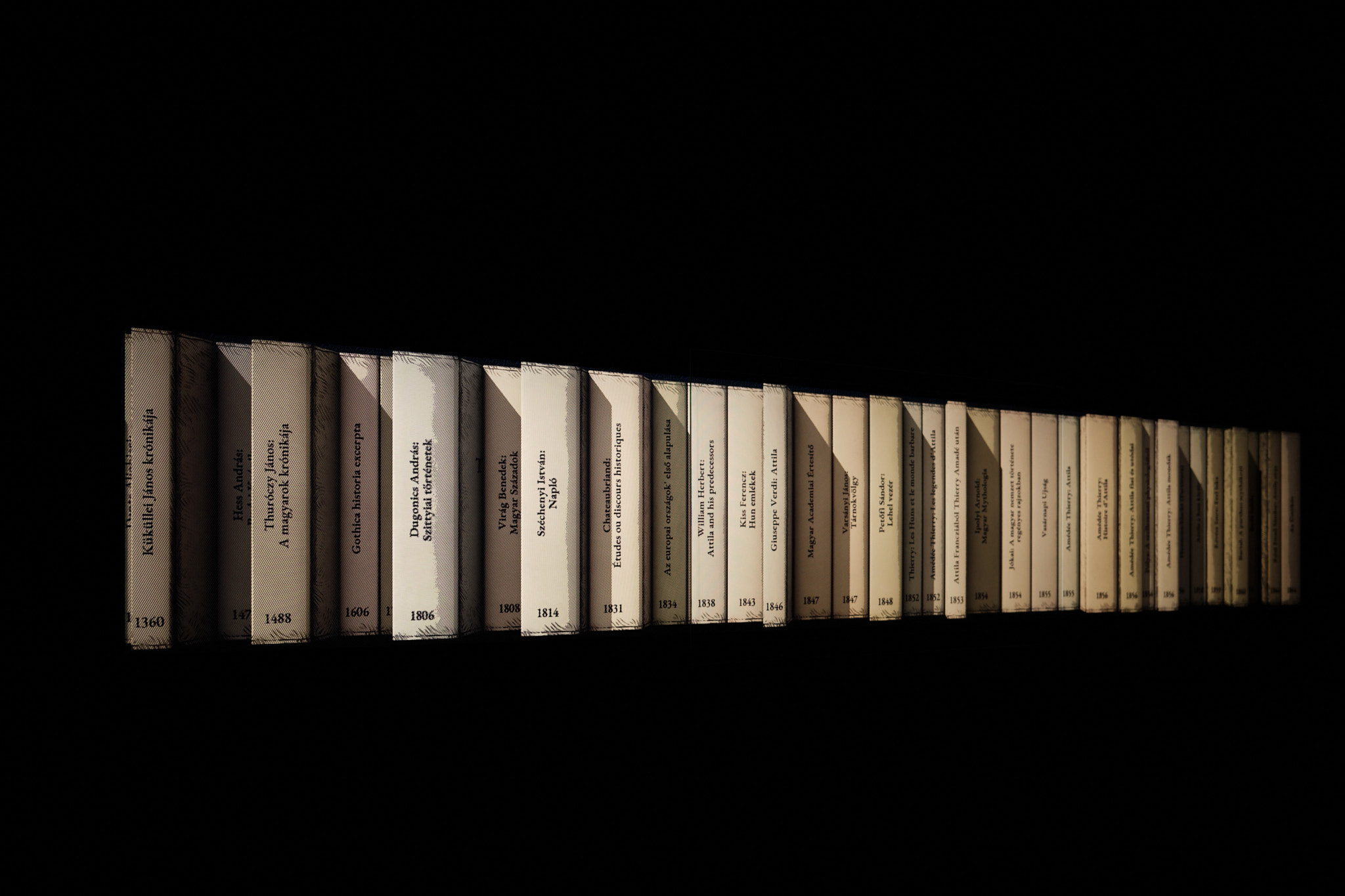
Attila Archive presents a curated selection of written records that refer to Attila across different centuries and media. The material ranges from codices and scholarly publications to newspapers and comic books. To create a coherent visual language, these diverse sources appear as a unified row of volumes, while the pages themselves remain faithful scans of the original documents. Visitors can browse the collection on a long interactive display, scroll through the volumes, open individual items, and examine selected pages in more detail.
Legendary Sword Creator
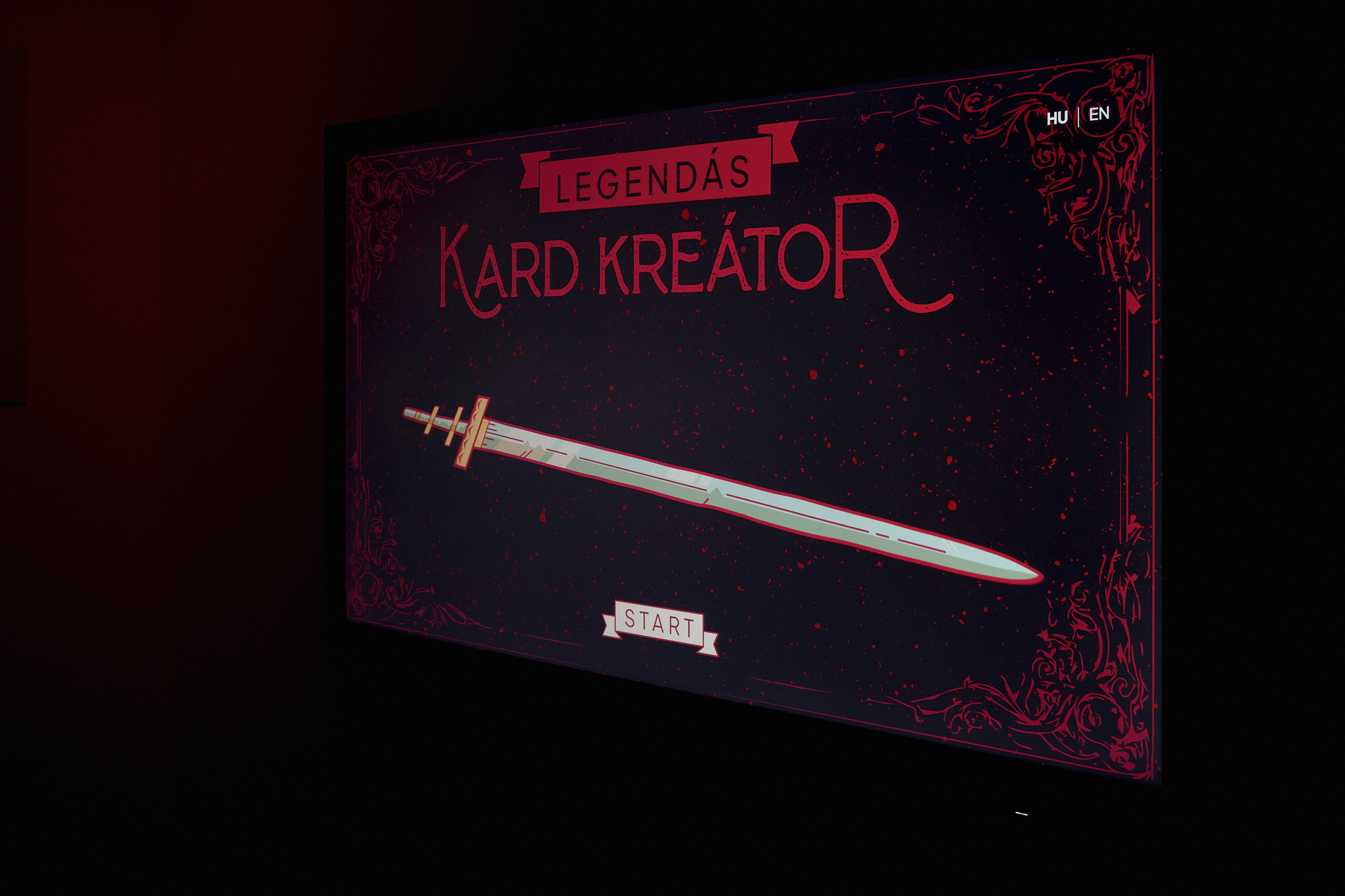
Interactive installation inviting visitors to create their own historical sword design.
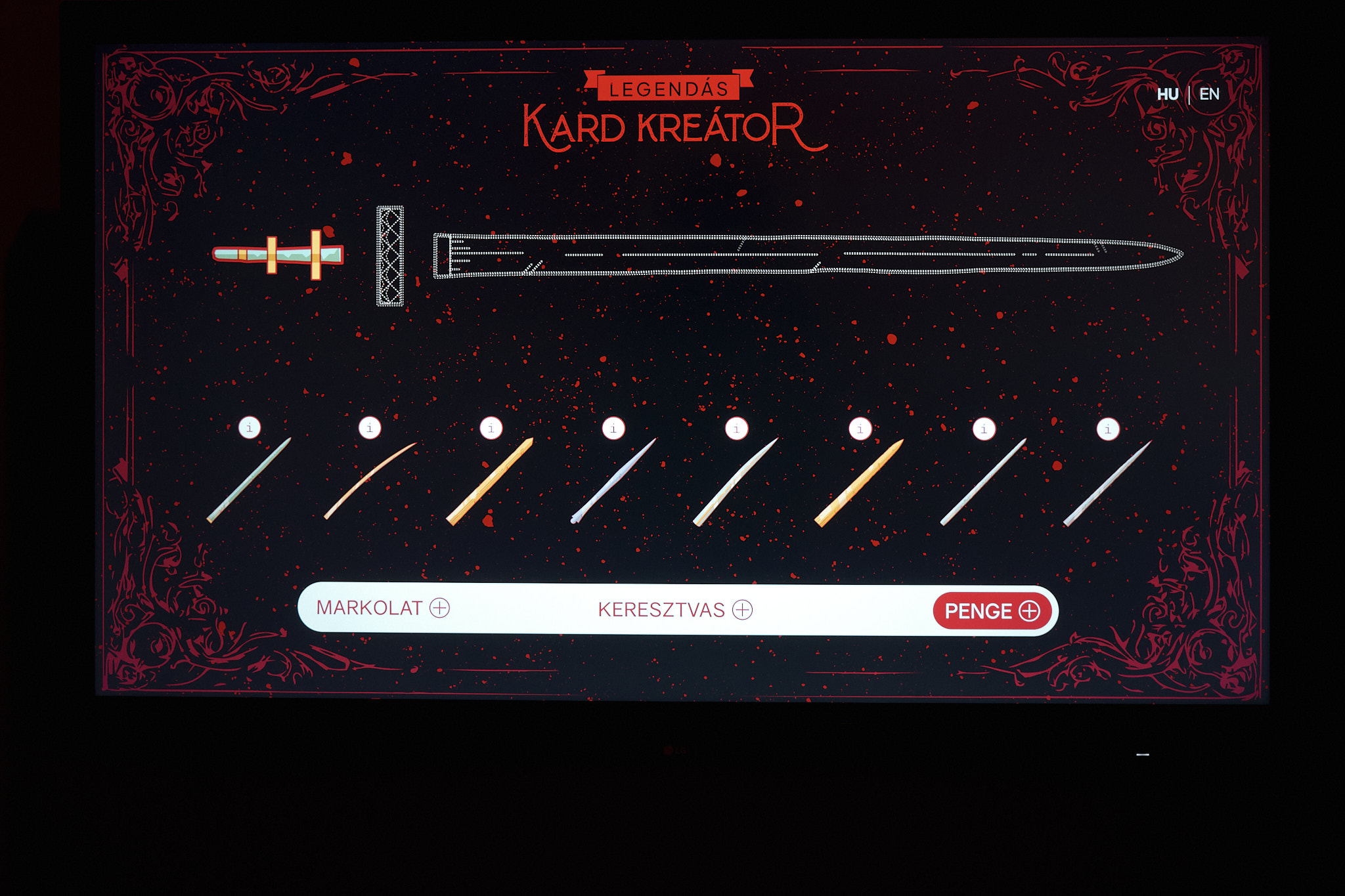
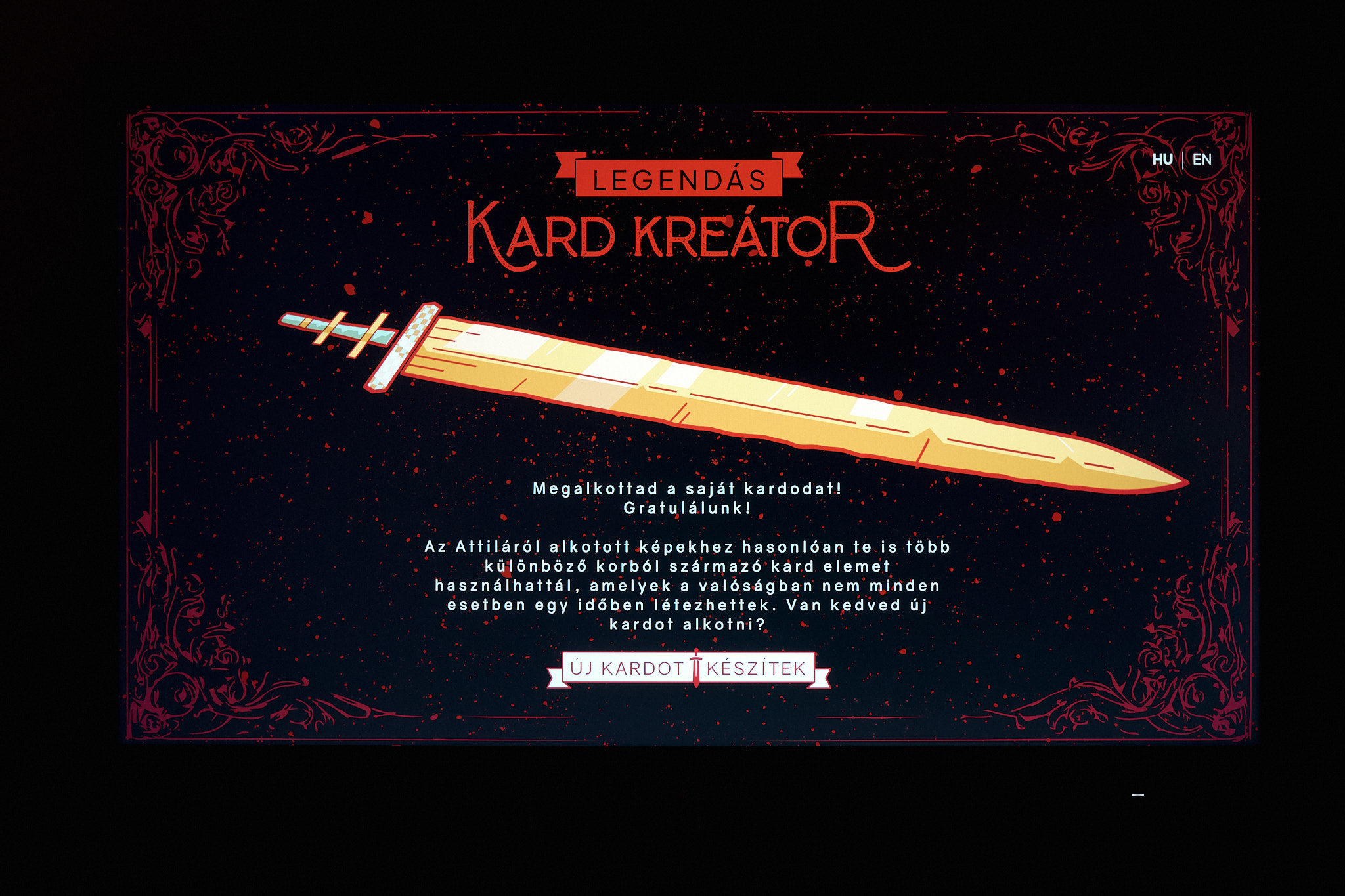
In this touchscreen installation, visitors can assemble their own sword by choosing the hilt, crossguard, and blade one by one. Each option is based on an object or motif presented in the exhibition, so the act of customization also becomes a way of learning about the artefacts behind the design. Once the selection is complete, the interface presents the finished sword together with short contextual information about the chosen parts.
Attila’s Grave
Interactive map exploring the many presumed locations of Attila the Hun’s grave.
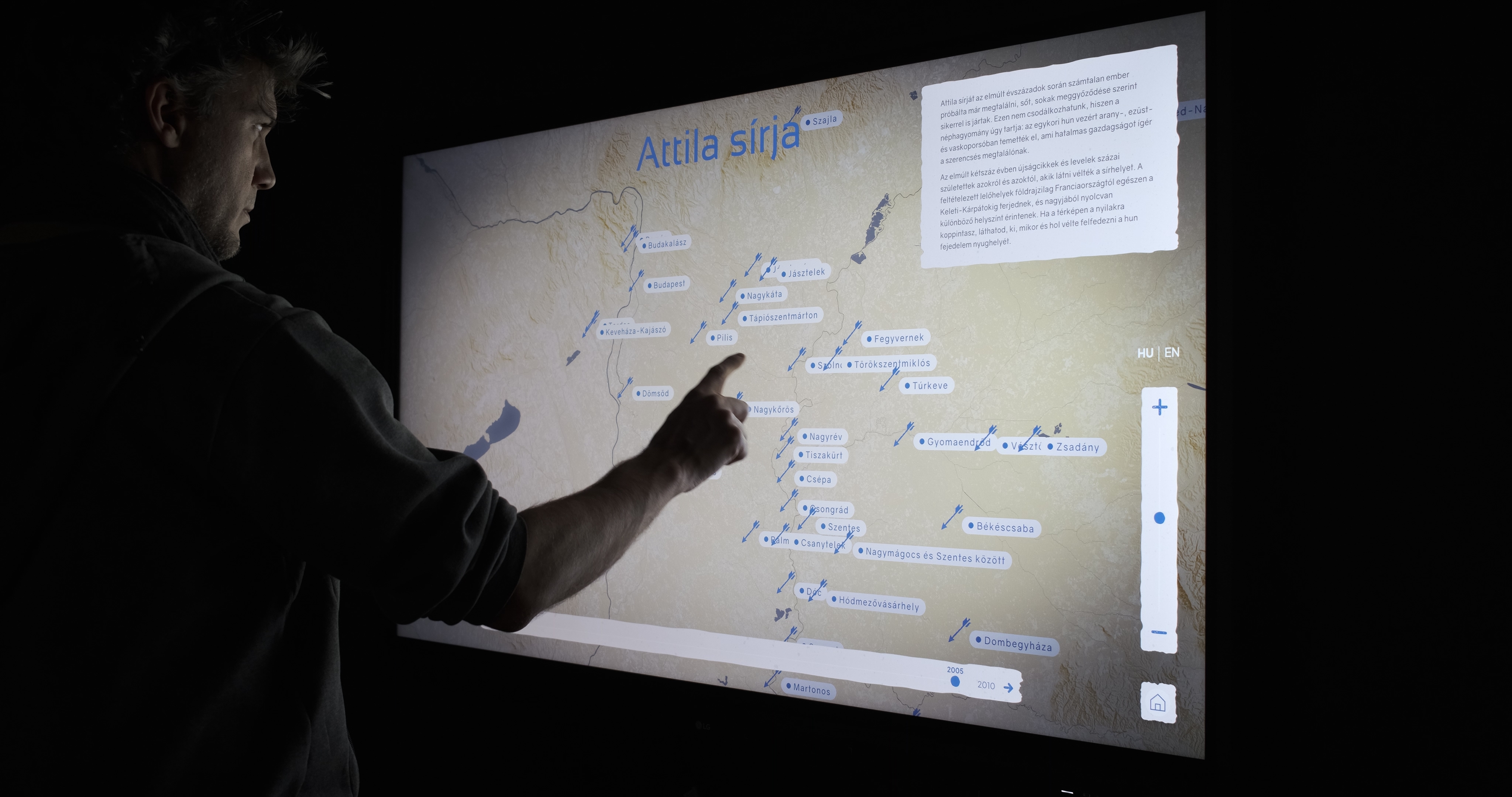
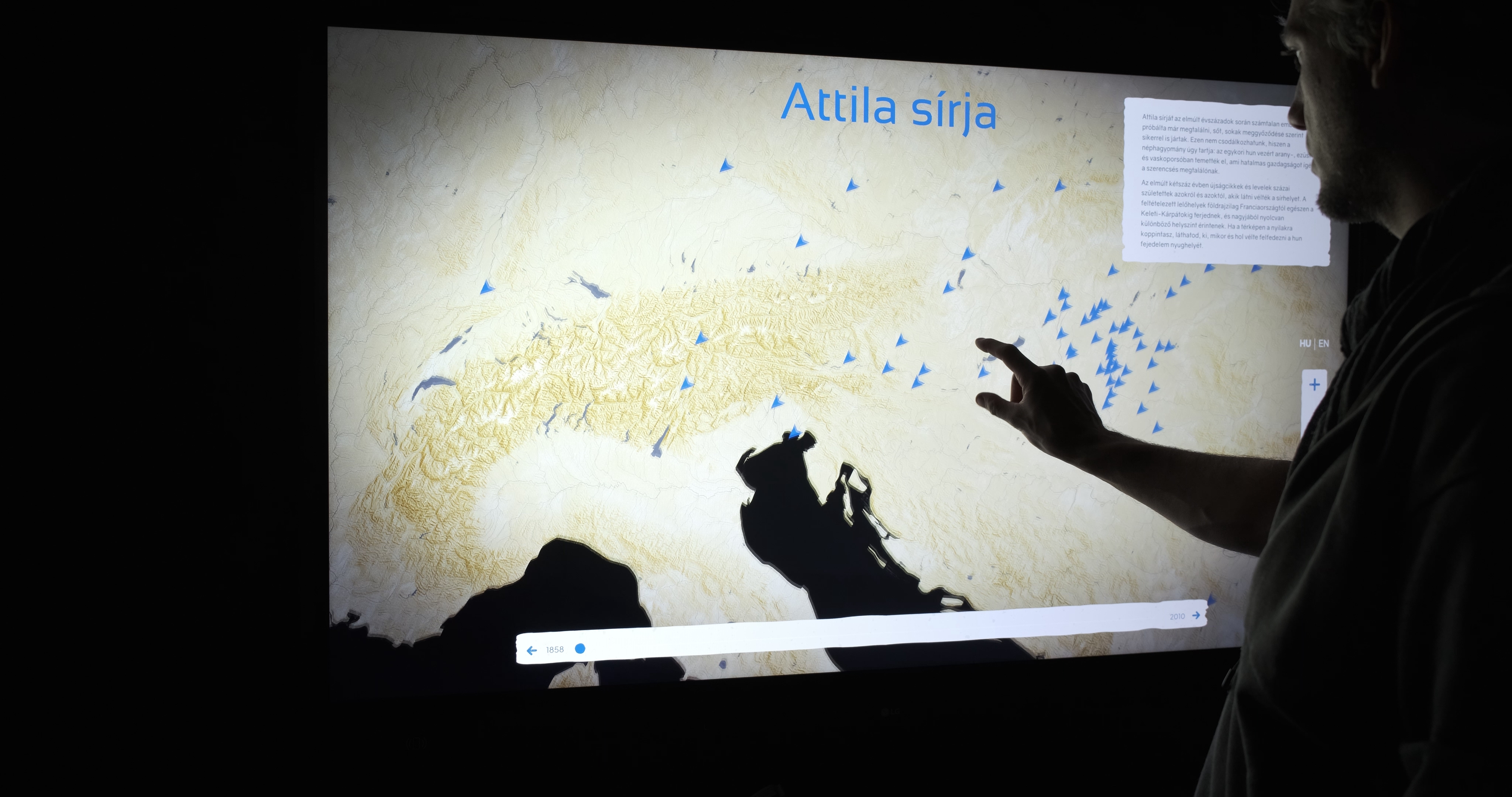
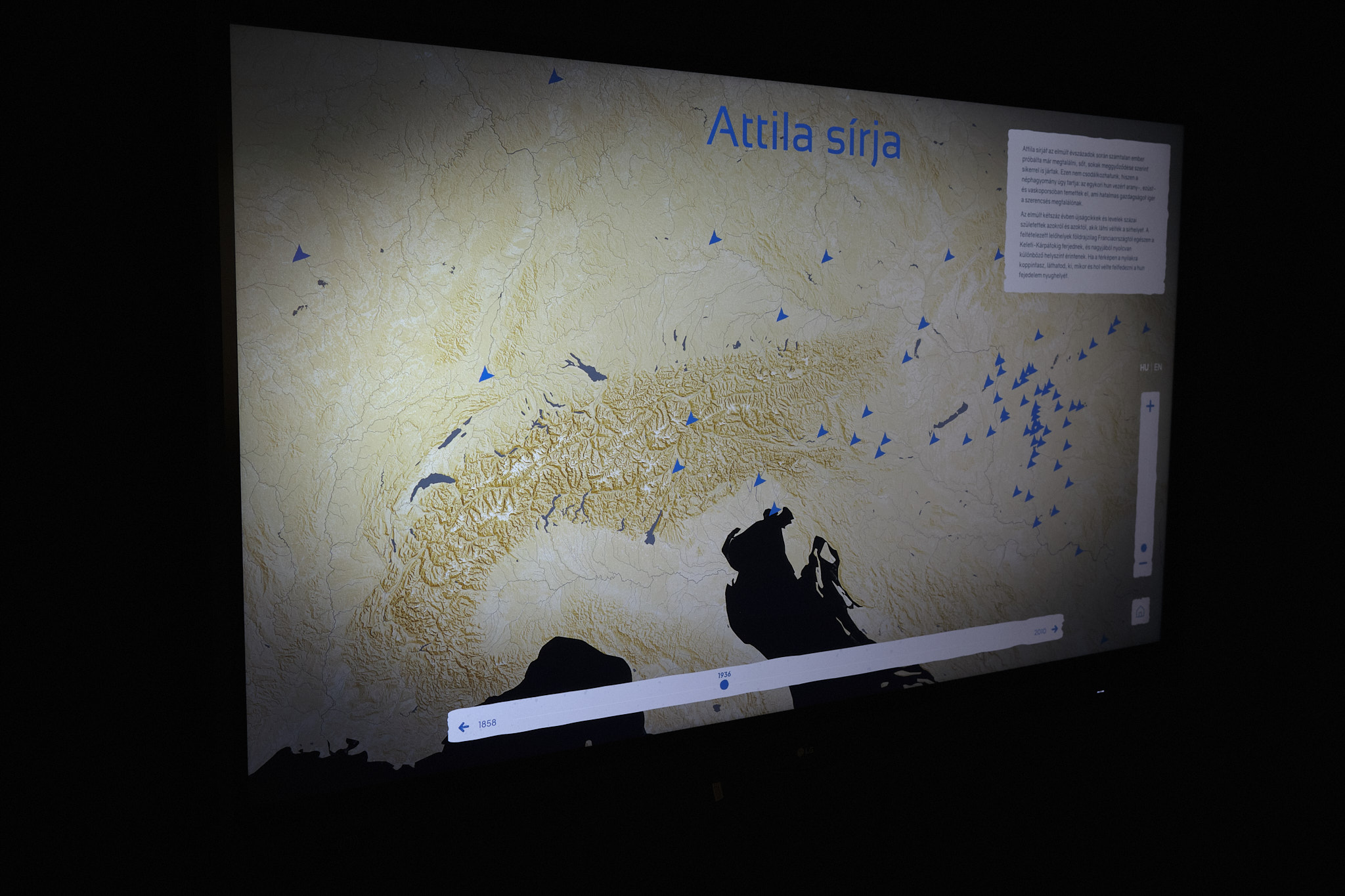
Over the centuries, thousands of people have attempted to locate the grave of Attila the Hun, with many believing they had succeeded. This is hardly surprising in light of folk tradition, which holds that the former Hun leader was buried in three coffins made respectively of gold, silver, and iron, thus promising enormous wealth to any lucky finder.
Hundreds of newspaper articles, letters, and reports were published over the past two centuries by or about people who claimed to have found the grave. The presumed locations range from France to the Eastern Carpathians and cover roughly eighty different sites.
By exploring the marked locations on the map, visitors can trace where these discoveries were reported, when they entered public circulation, and who made the claims. The piece turns a persistent historical legend into a searchable geography of speculation.
Attila Face Reconstructor
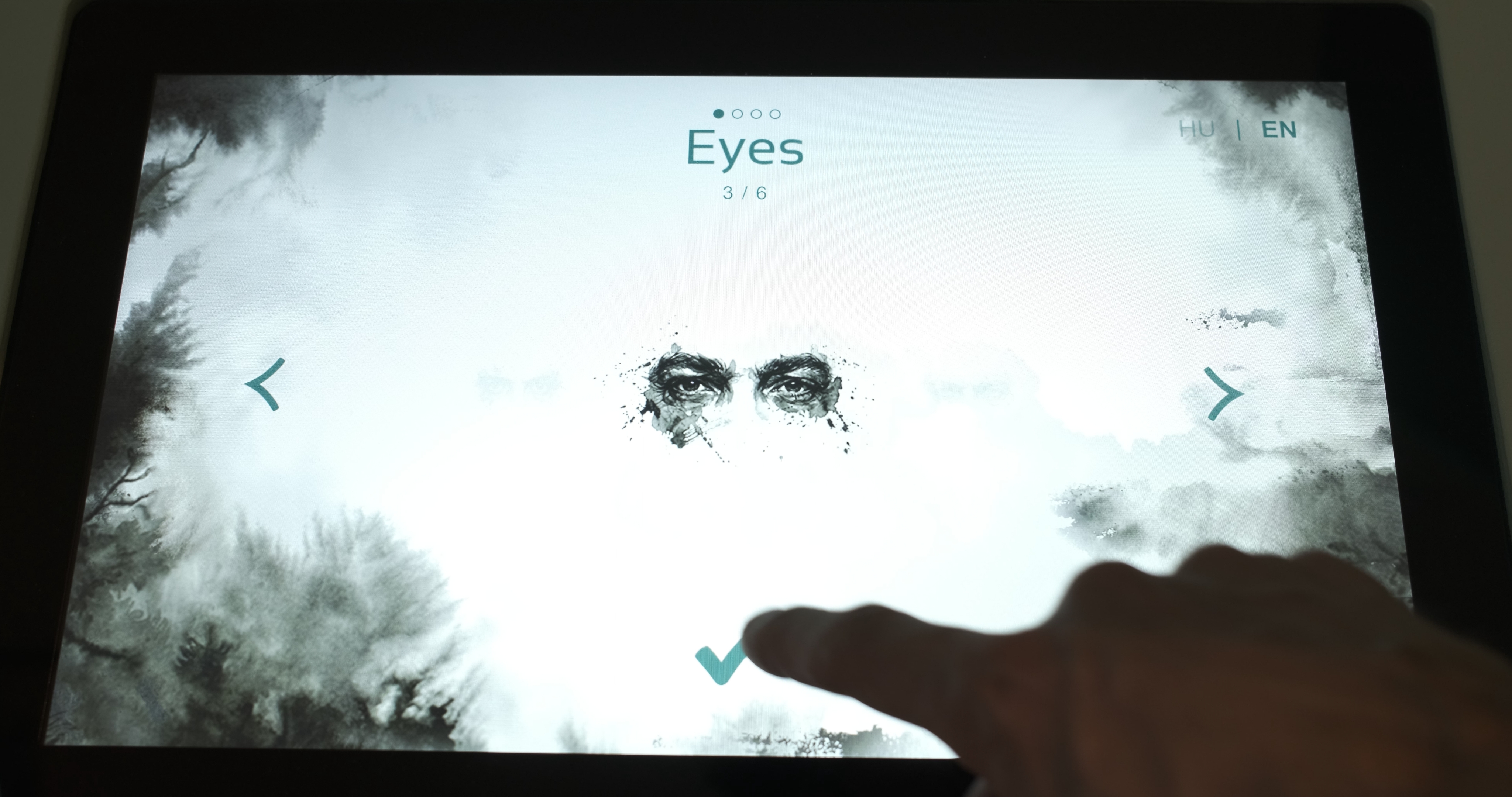
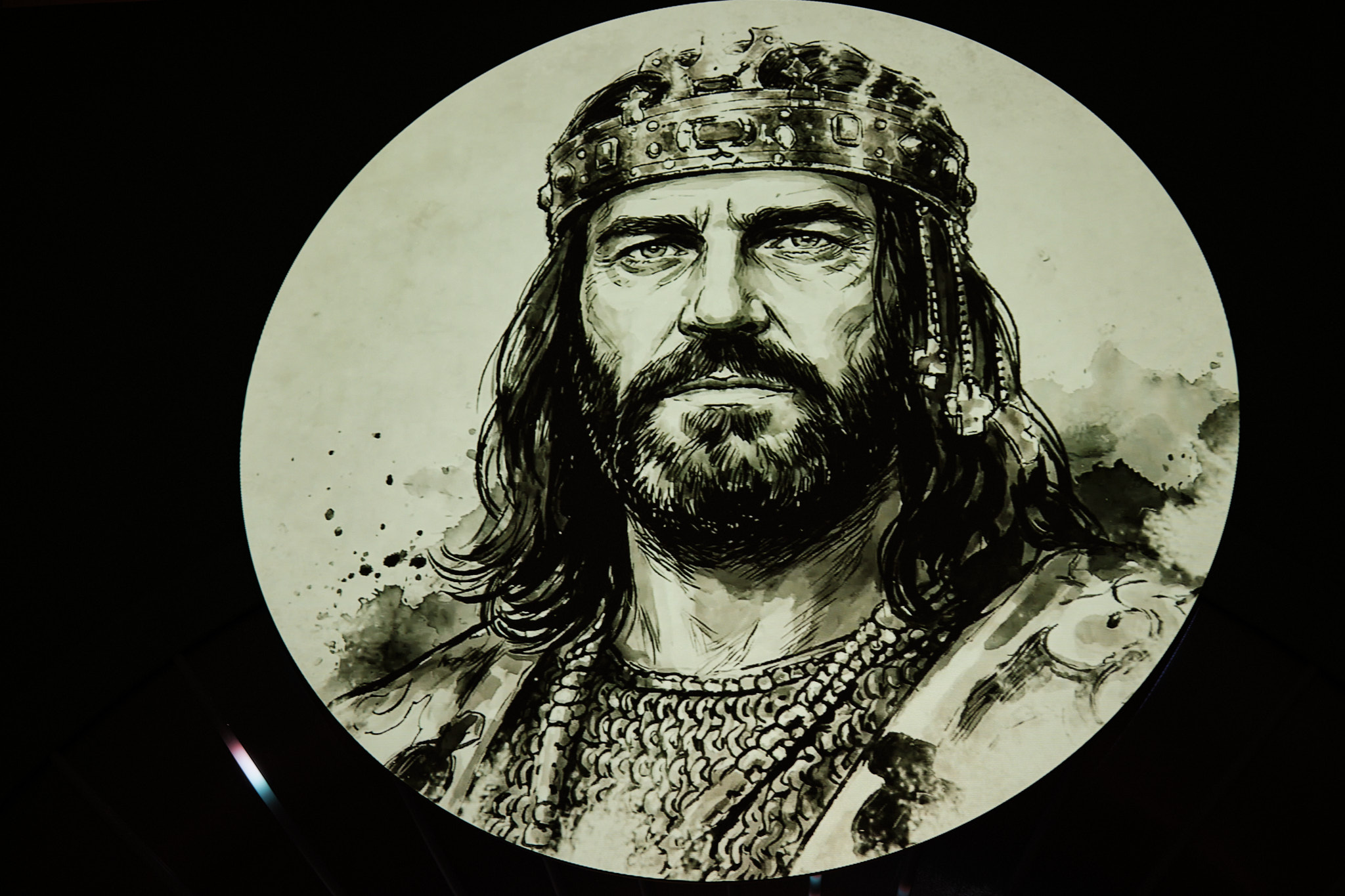
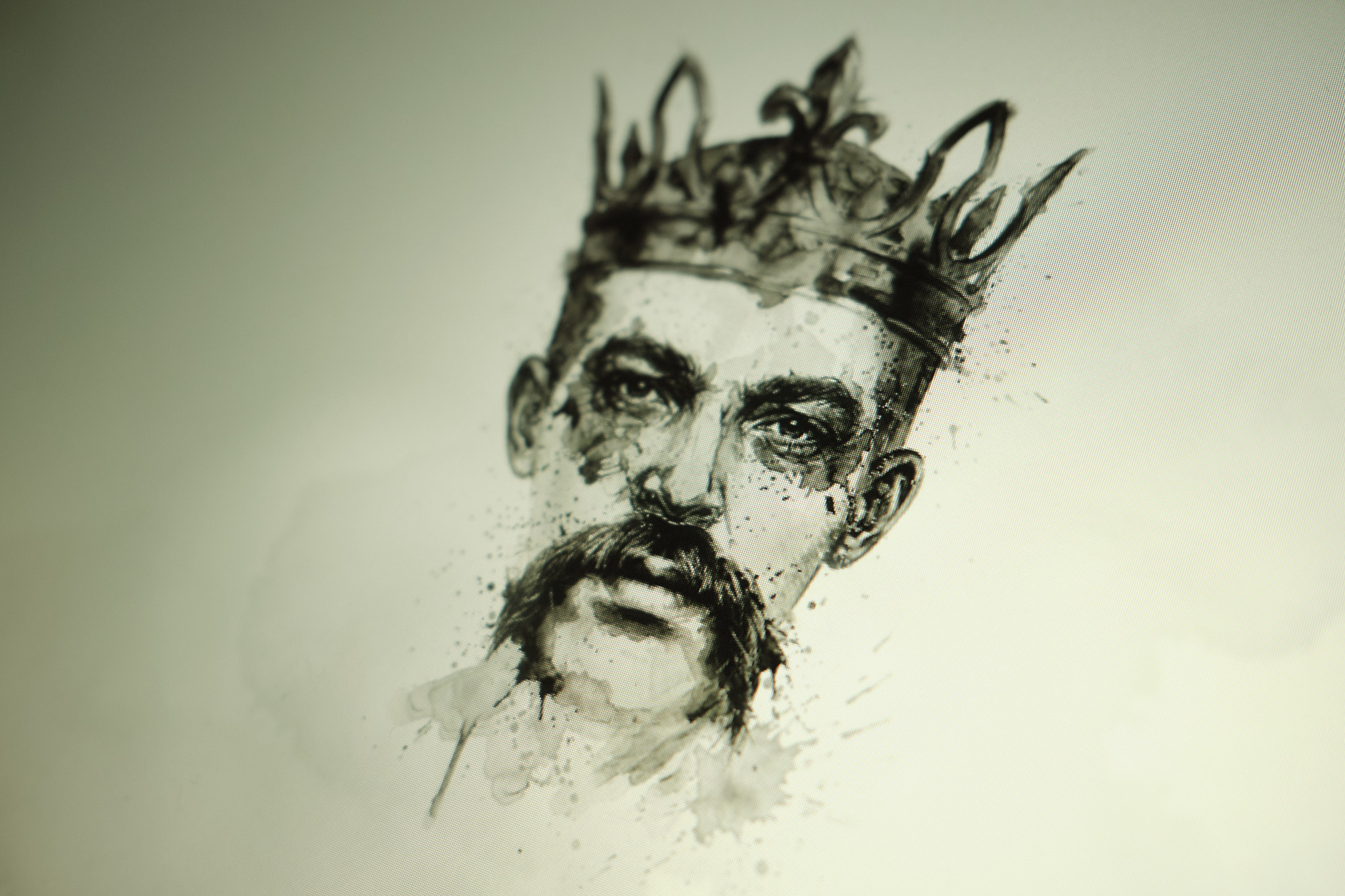
This installation explores the speculative reconstruction of Attila’s face through a contemporary digital interface. It connects historical imagination, visual interpretation, and reconstruction techniques in a format that invites visitors to reflect on how iconic historical figures are continuously re-created through images.
On the touchscreen, visitors compose their own depiction of Attila by selecting the eyes, nose, mouth, beard, and headwear they prefer from the diverse portraits and representations encountered throughout the exhibition. Their assembled face then appears within a continuously shifting projection of Attila portraits, placing each individual interpretation alongside the many historical and imagined versions of the figure.
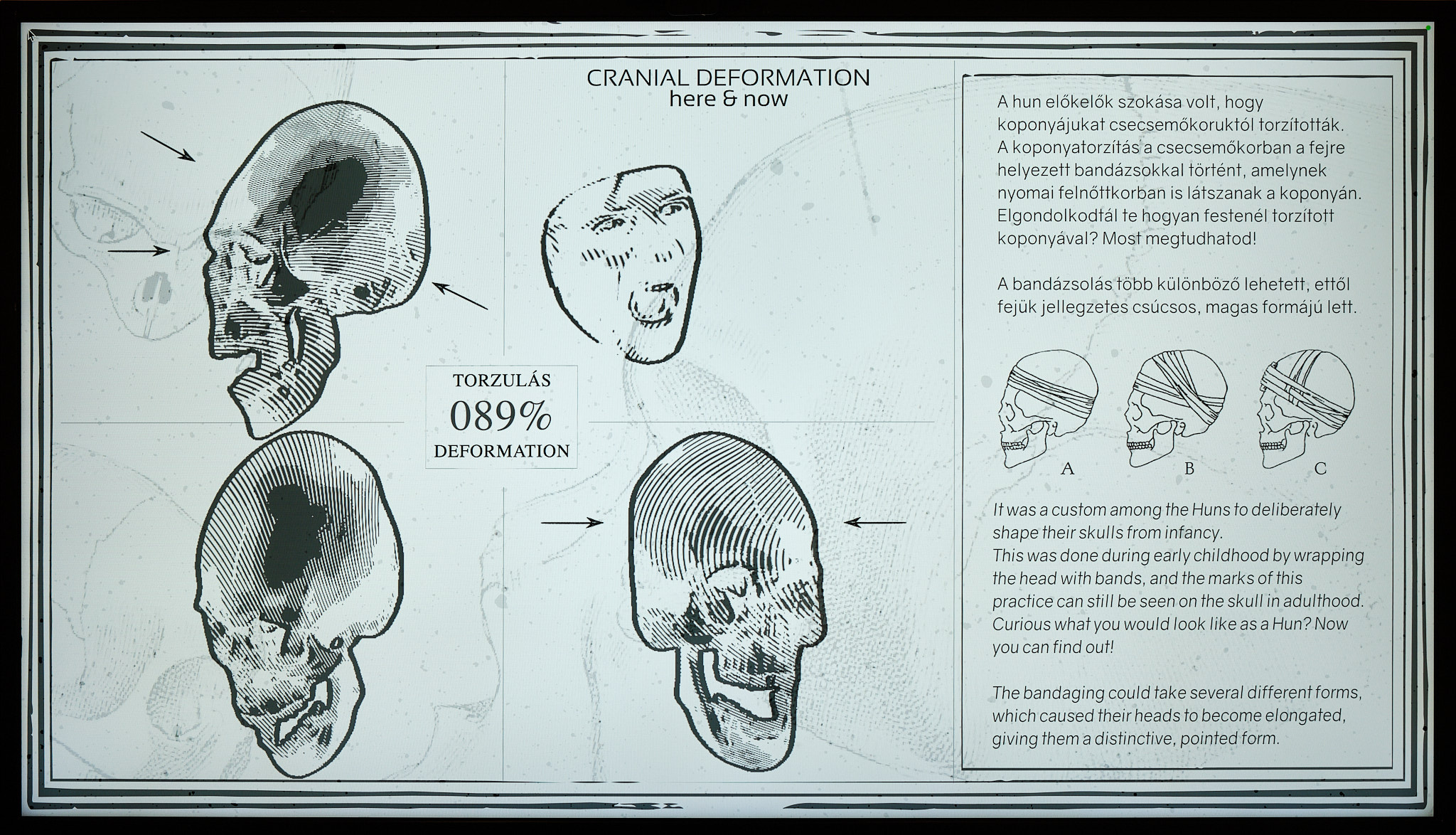
Cranial Deformation
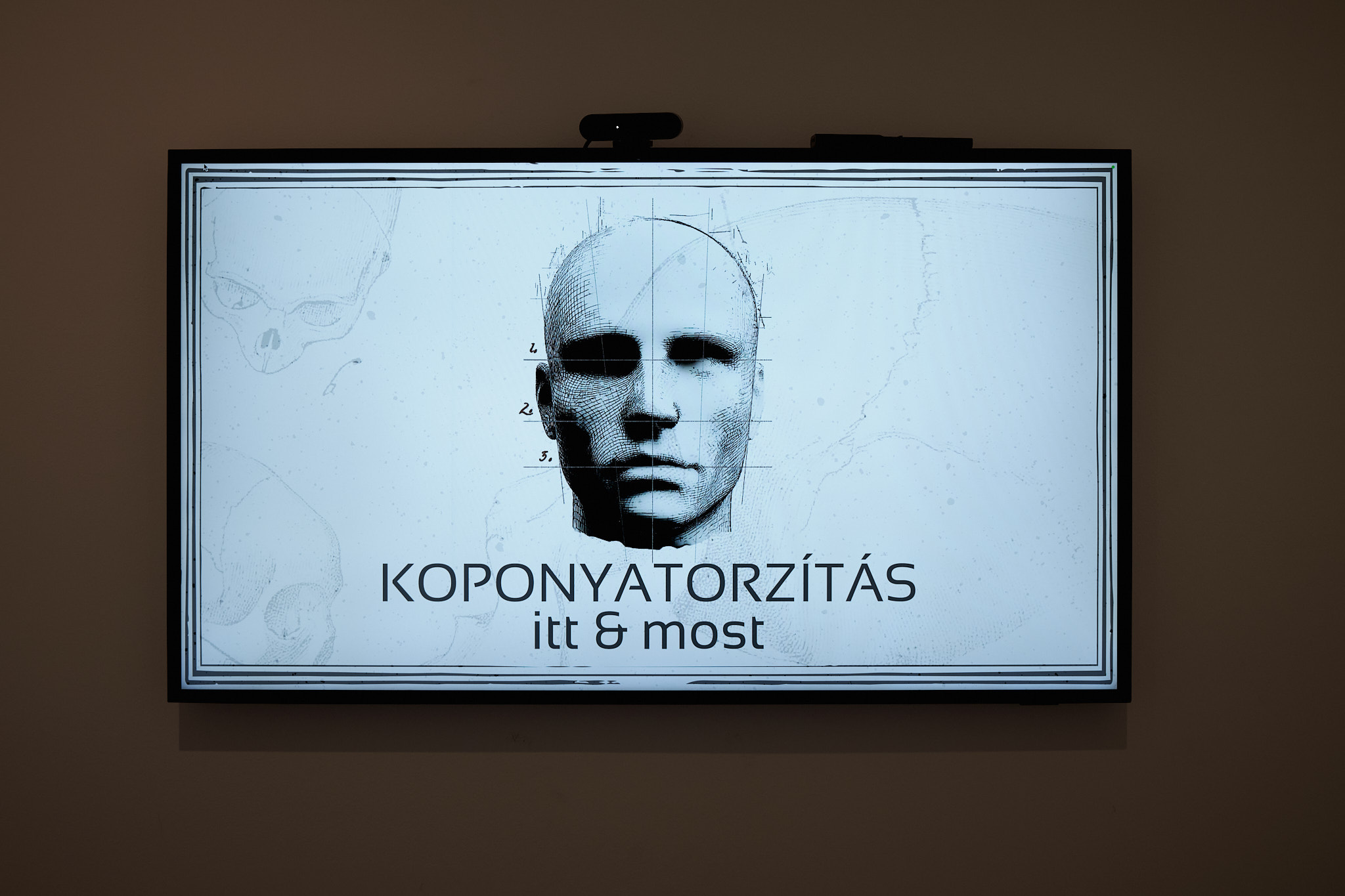
It was a custom among the Huns to deliberately shape their skulls from infancy.
This was done during early childhood by wrapping the head with bands, and the marks of this practice can still be seen on the skull in adulthood.
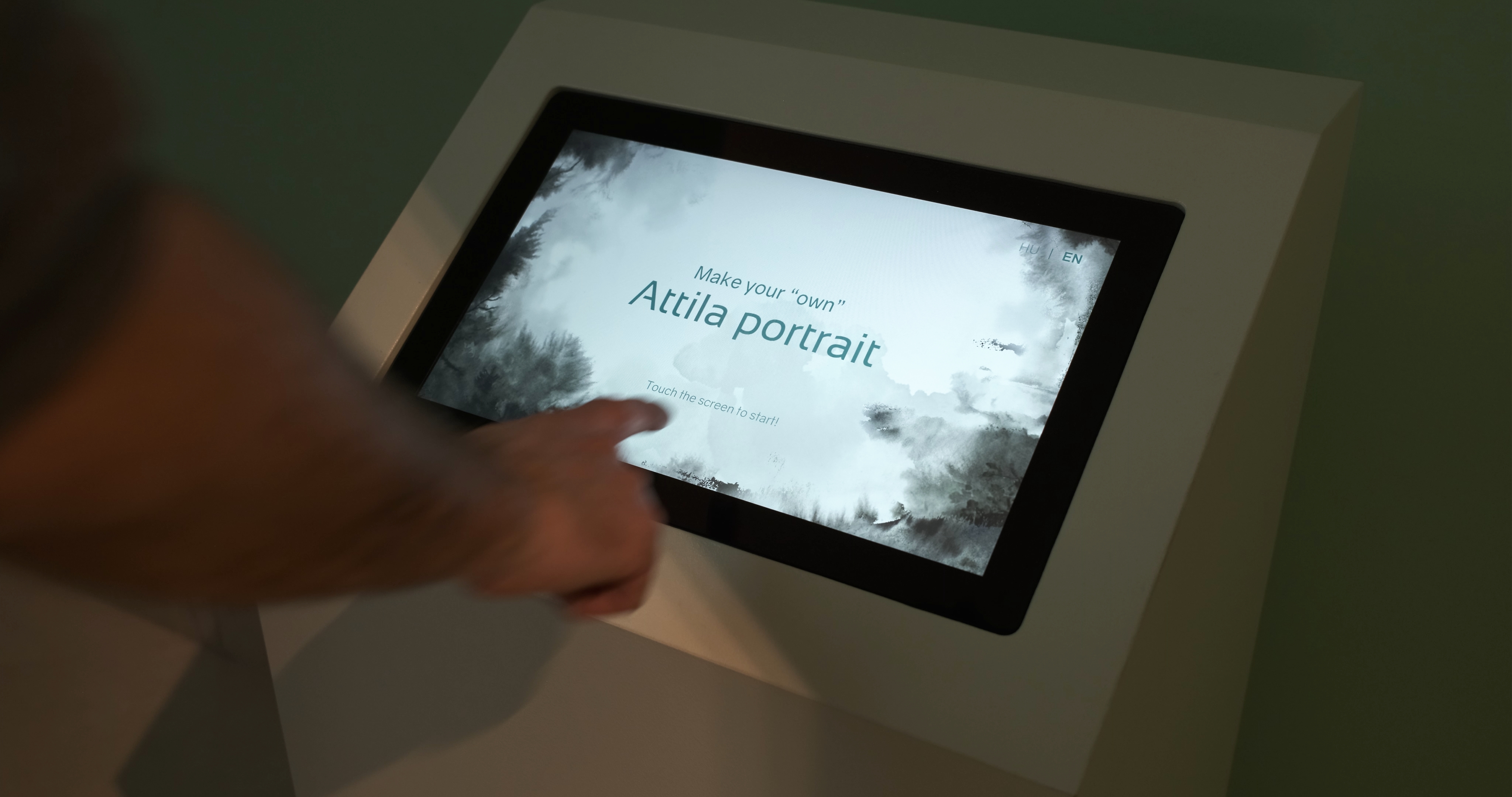
Curious what you would look like as a Hun? Now you can find out!
The bandaging could take several different forms, which caused their heads to become elongated, giving them a distinctive, pointed form.
The experience uses face detection based on skull deformation. Its three-direction view is driven by the visitor’s head movement.
Feast Table Projection
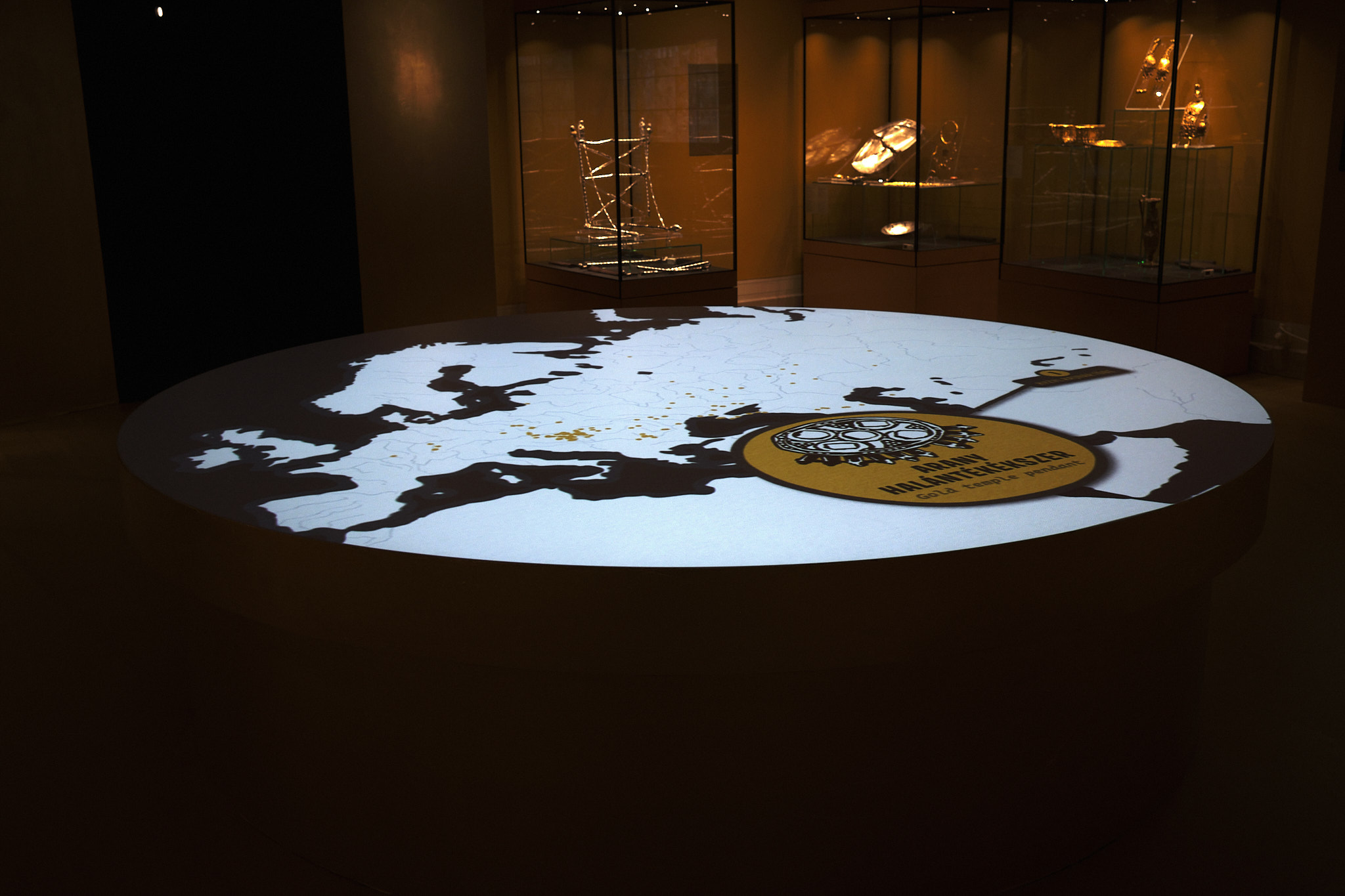
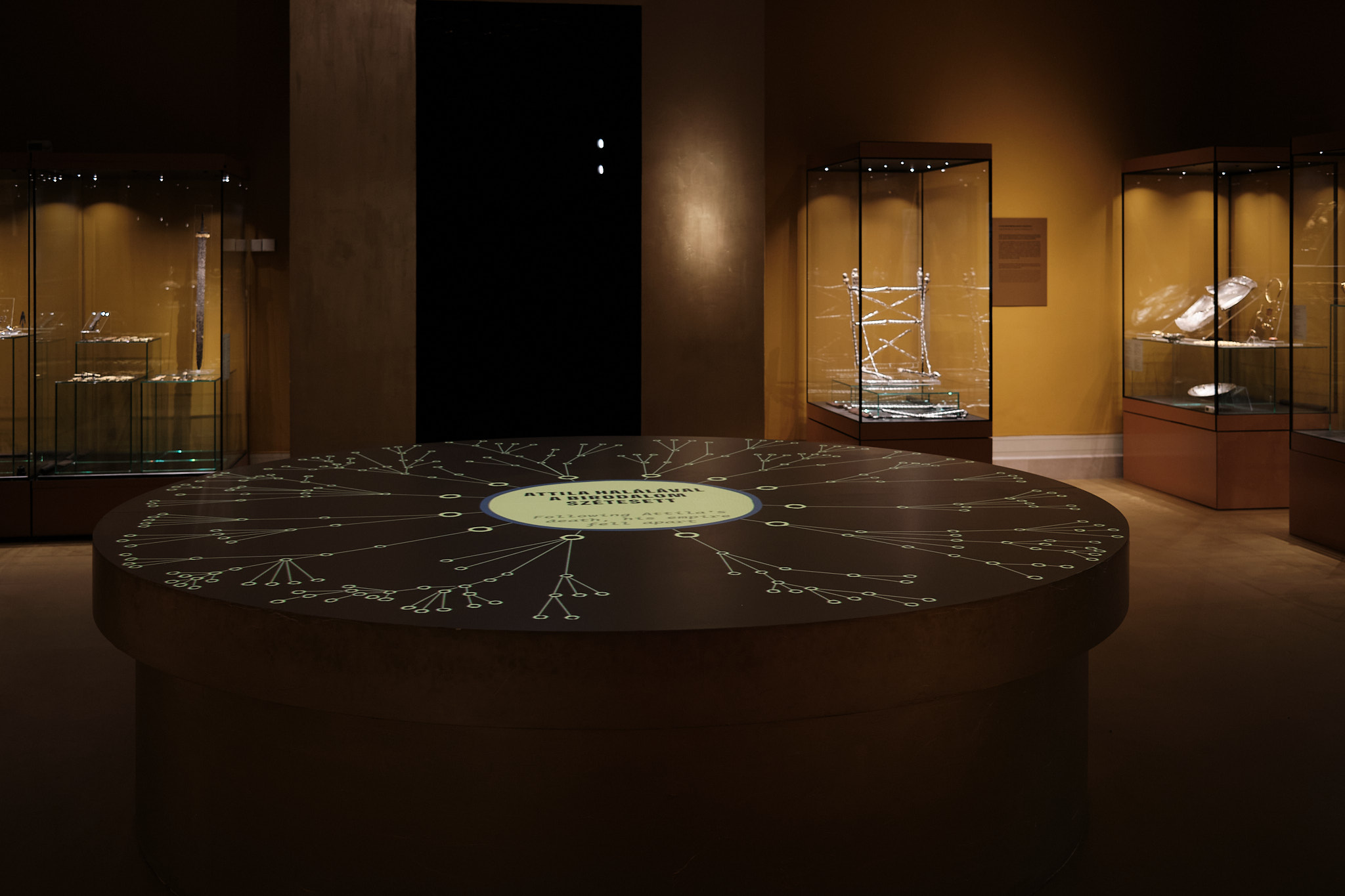
A three-metre circular projection table turns the exhibition’s archaeological material into a shared, immersive map. Its looping animation follows the formation and extent of Attila’s empire through the locations of more than a hundred finds, connecting objects in the exhibition to the wider geography from which they originate. The map gradually resolves into an abstract network, echoing the suspended installation above the table. This network represents the scale of the empire and dissolves at the end of the loop.

Who Were the Huns?
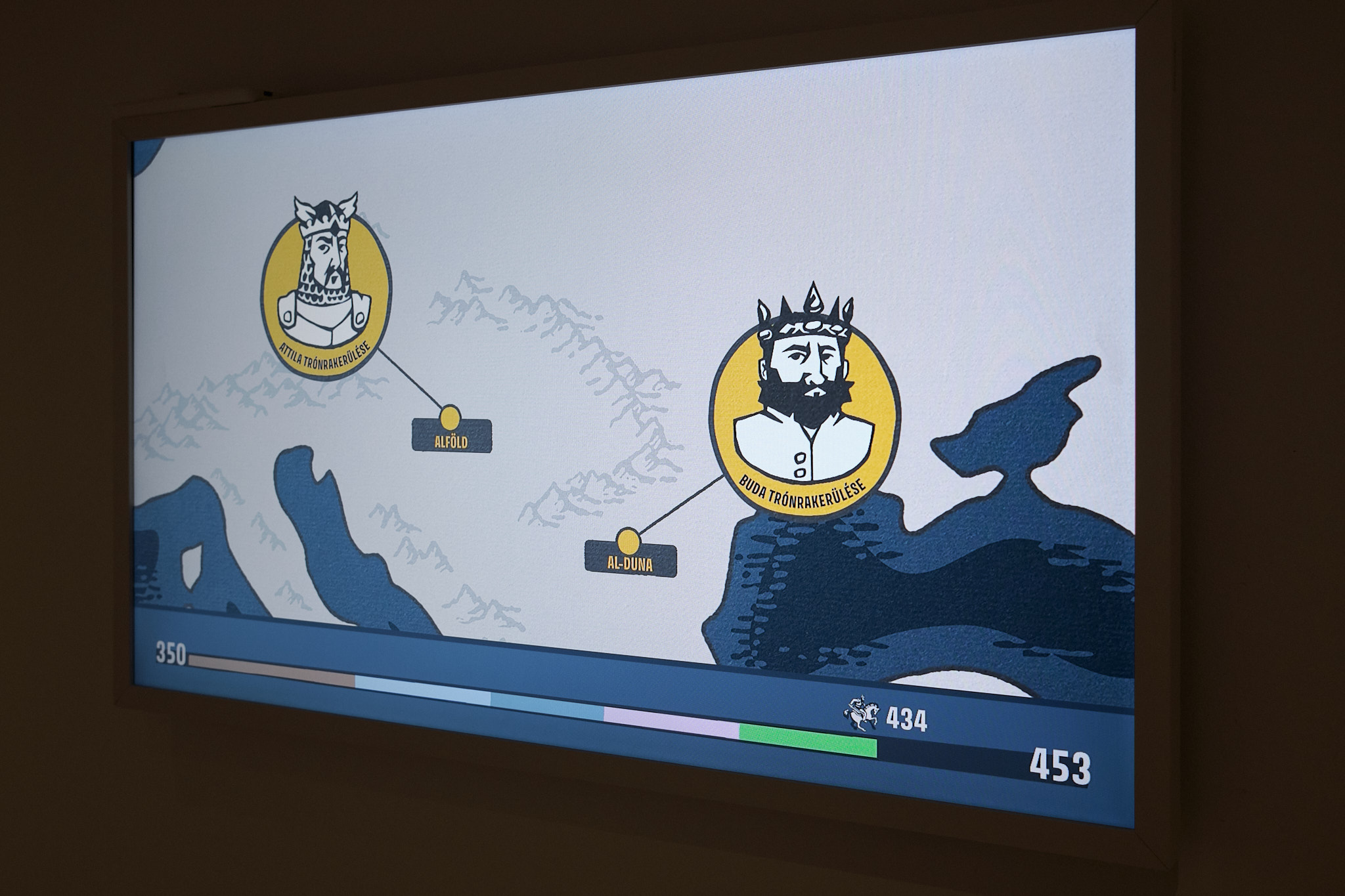
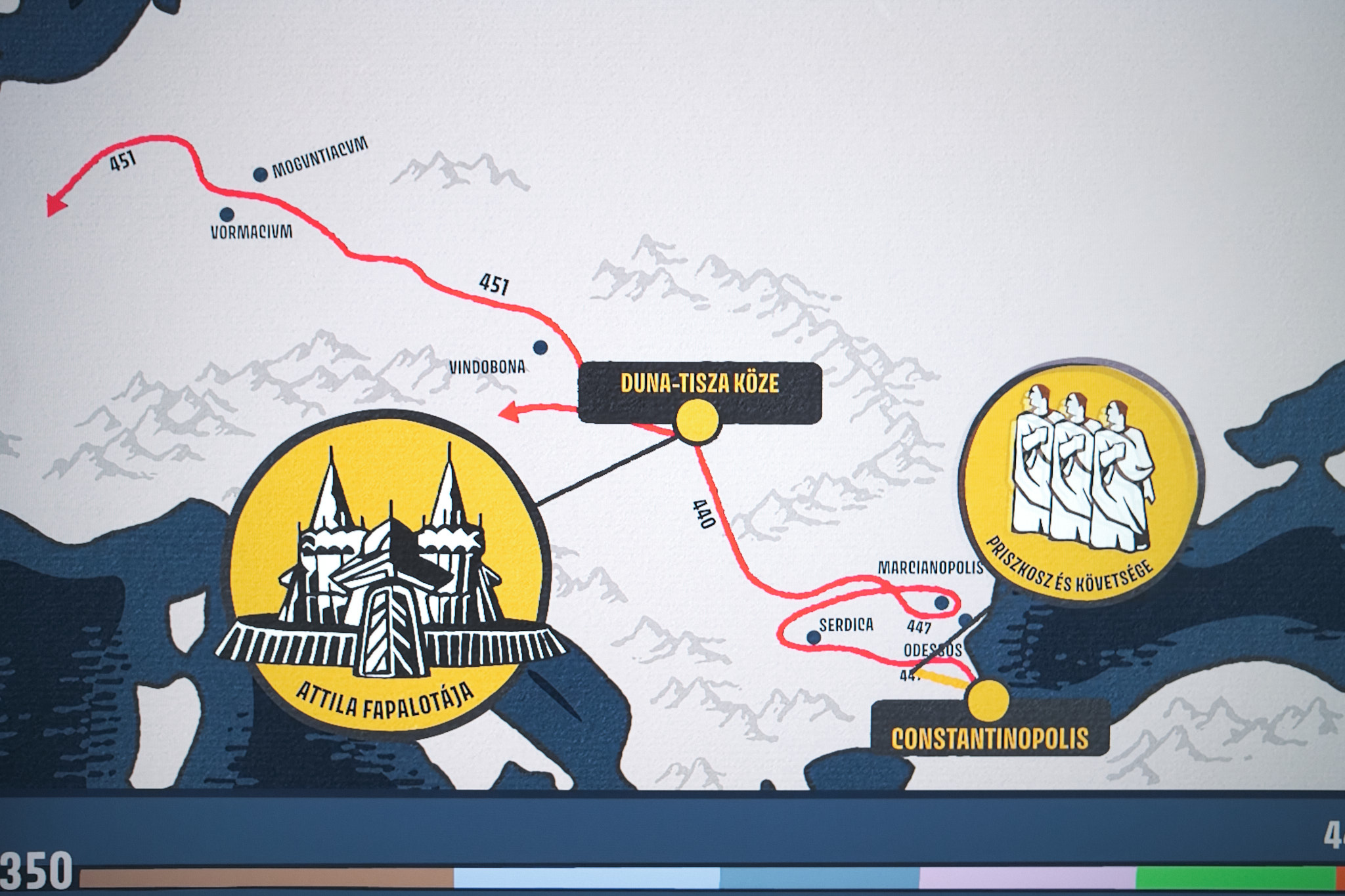
A screen-based animated map traces the Huns’ movement across Eurasia, from their early westward advance to the campaigns of Attila’s reign. Arrows mark major military expeditions while a deliberately partial network suggests the uncertain extent of the empire: concentrated along the Danube and the Black Sea, then thinning eastward across the steppe.
As the view closes in on Attila’s era, the narrative follows the expansion of the empire, diplomatic encounters, and decisive campaigns.
credits
Created by: Gita Elek, Gáspár Hajdu, Flóra Petrók, Sámuel Setényi, Roland Vass
Animations: Piros Animation